What is climate change? A really simple guide


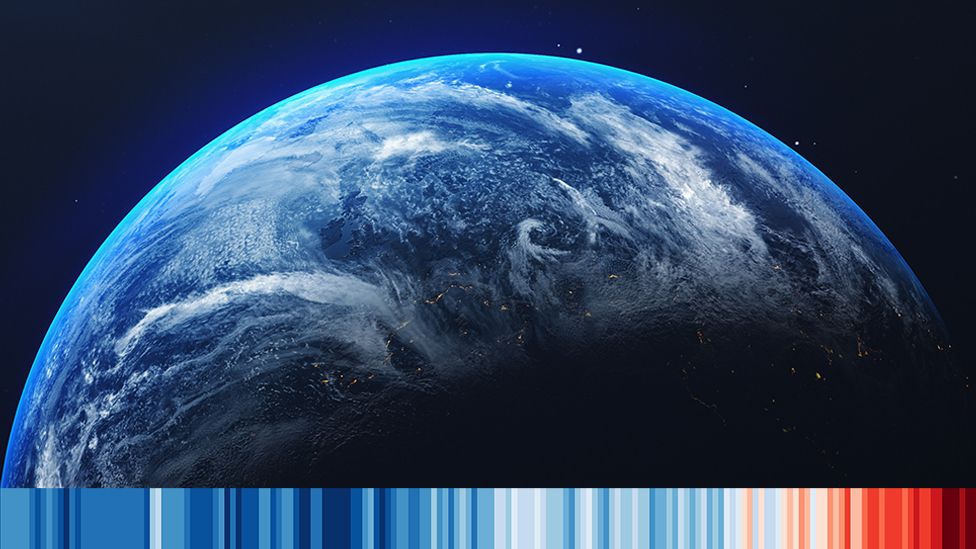
Picture of the Earth

World temperatures are rising because of human activity, and climate change now threatens every aspect of human life.

Left unchecked, humans and nature will experience catastrophic warming, with worsening droughts, greater sea level rise and mass extinction of species.

We face a huge challenge, but there are potential solutions.

What is climate change?

Climate is the average weather in a place over many years. Climate change is a shift in those average conditions.

The rapid climate change we are now seeing is caused by humans using oil, gas and coal for their homes, factories and transport.

When these fossil fuels burn, they release greenhouse gases - mostly carbon dioxide (CO2). These gases trap the Sun's heat and cause the planet's temperature to rise.

The world is now about 1.2C warmer than it was in the 19th Century - and the amount of CO2 in the atmosphere has risen by 50%.
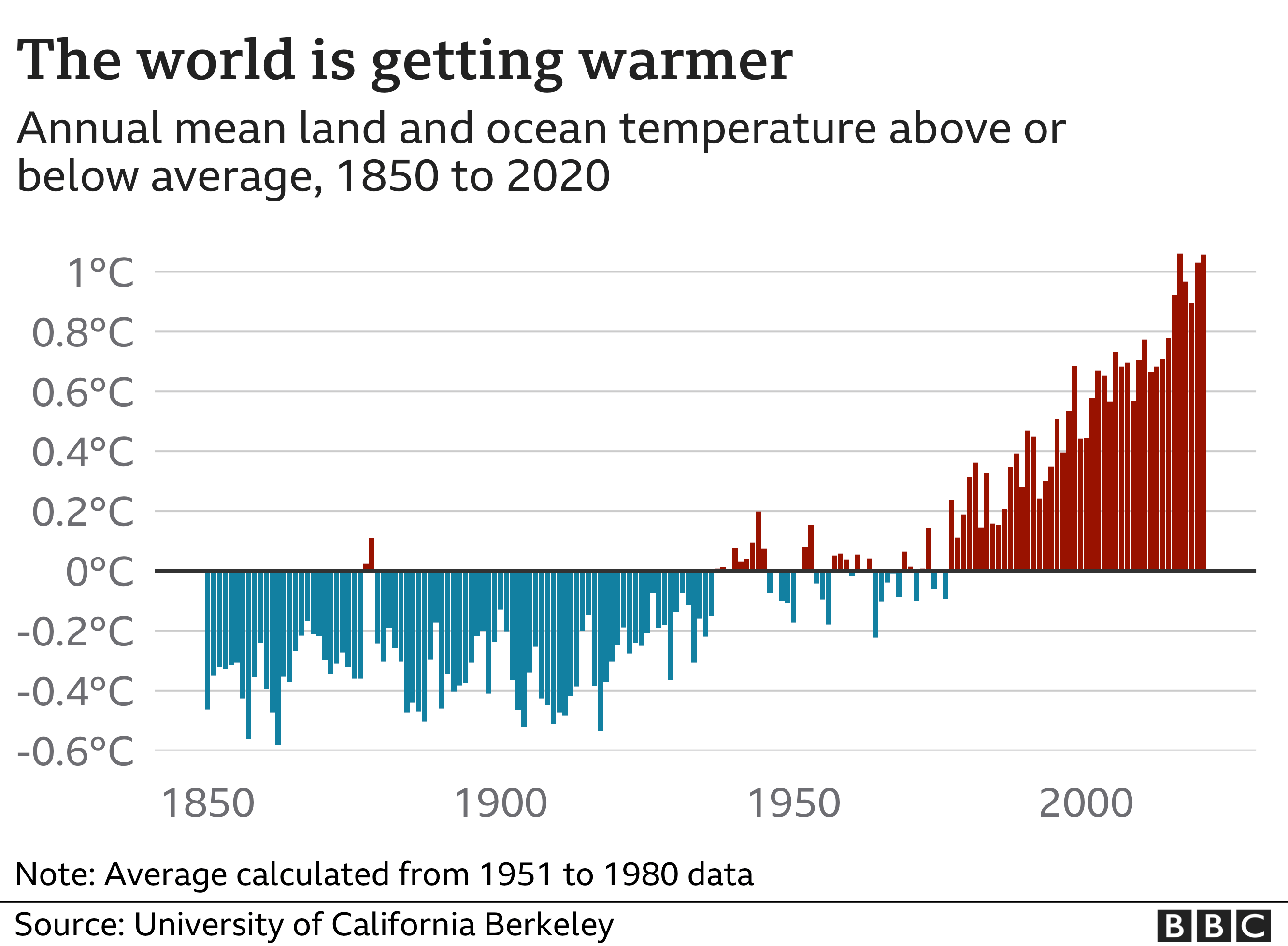
Bar chart showing how the world has been getting warmer between 1850 to 2020

Temperature rises must slow down if we want to avoid the worst consequences of climate change, scientists say. They say global warming needs to be kept to 1.5C by 2100.

However, unless further action is taken, the planet could still warm by more than 2C by the end of this century. A report in 2021 by the Climate Action Tracker group calculated that the world was heading for 2.4C of warming by the end of the century.

If nothing is done, scientists think global warming could exceed 4C in the future, leading to devastating heatwaves, millions losing their homes to rising sea levels and irreversible loss of plant and animal species.

What is the impact of climate change?

Extreme weather events are already more intense, threatening lives and livelihoods.

With further warming, some regions could become uninhabitable, as farmland turns into desert. In other regions, the opposite is happening, with extreme rainfall causing historic flooding - as seen recently in China, Germany, Belgium and the Netherlands.

People in poorer countries will suffer the most as they do not have the money to adapt to climate change. Many farms in developing countries already have to endure climates that are too hot and this will only get worse.
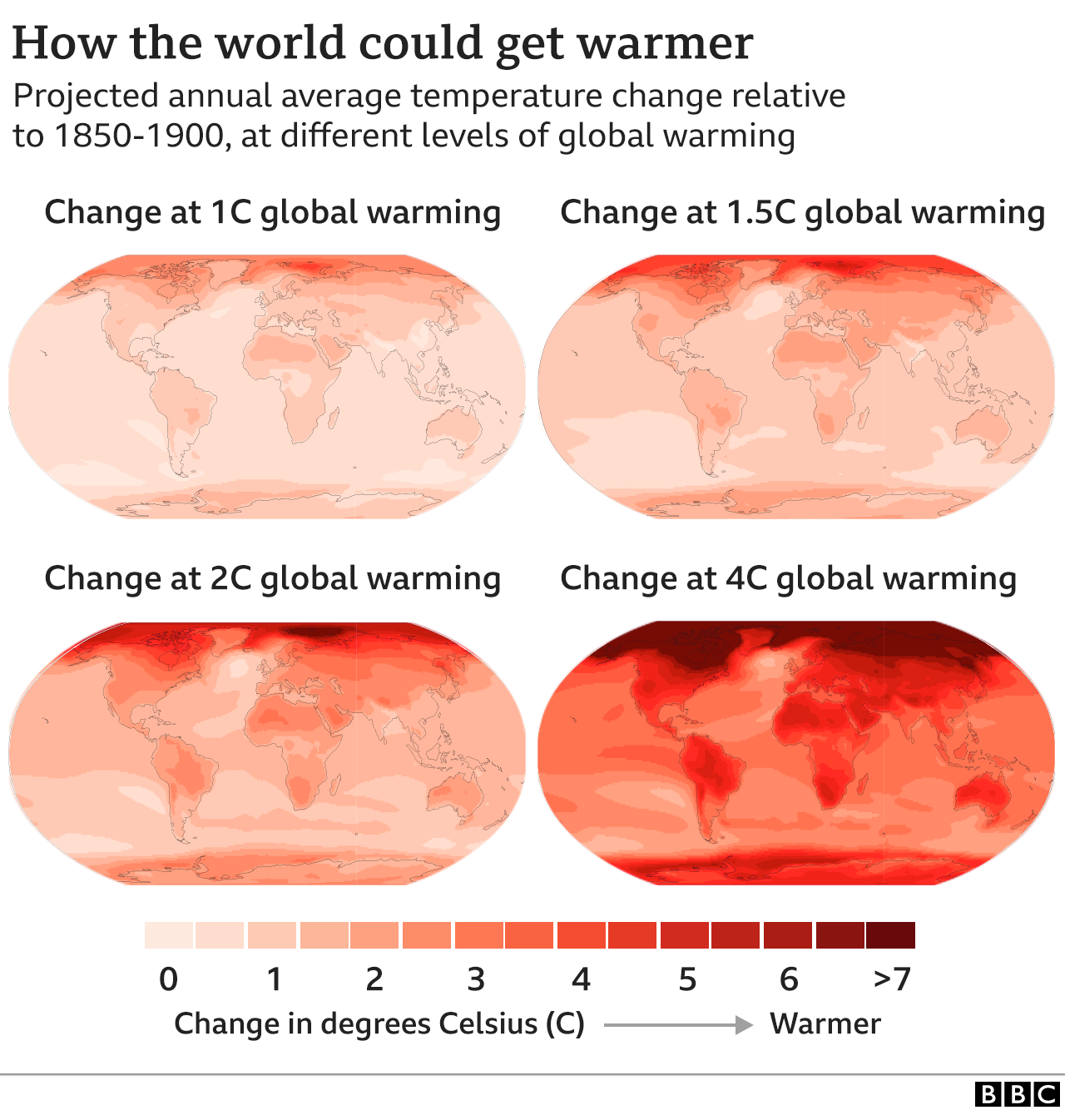
Infographic

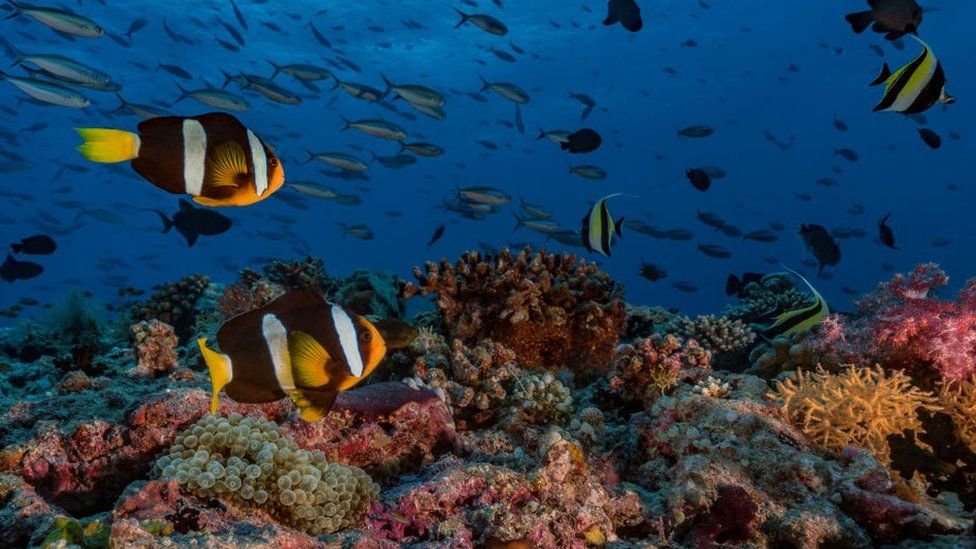
Our oceans and its habitats are also under threat. The Great Barrier Reef in Australia, for example, has already lost half of its corals since 1995 due to warmer seas driven by climate change.

Wildfires are becoming more frequent as climate change increases the risk of hot, dry weather.

And as frozen ground melts in places like Siberia, greenhouse gases trapped for centuries will be released into the atmosphere, worsening climate change.

In a warmer world, animals will find it harder to find the food and water they need to live. For example, polar bears could die out as the ice they rely on melts away, and elephants will struggle to find the 150-300 litres of water a day they need.

Scientists believe at least 550 species could be lost this century if action is not taken.
Coral reefIMAGE SOURCE,GETTY IMAGES
Image caption,
If temperatures continue to rise, almost all warm water coral reefs could be destroyed

How will different parts of the world be affected?

Climate change has different effects in different areas of the world. Some places will warm more than others, some will receive more rainfall and others will face more droughts.

If temperature rise cannot be kept within 1.5C:

  • The UK and Europe will be vulnerable to flooding caused by extreme rainfall
  • Countries in the Middle East will experience extreme heatwaves and farmland could turn to desert
  • Island nations in the Pacific region could disappear under rising seas
  • Many African nations are likely to suffer droughts and food shortages
  • Drought conditions are likely in the western US, while other areas will see more intense storms
  • Australia is likely to suffer extremes of heat and drought

How might decisions at the climate summit change our lives?


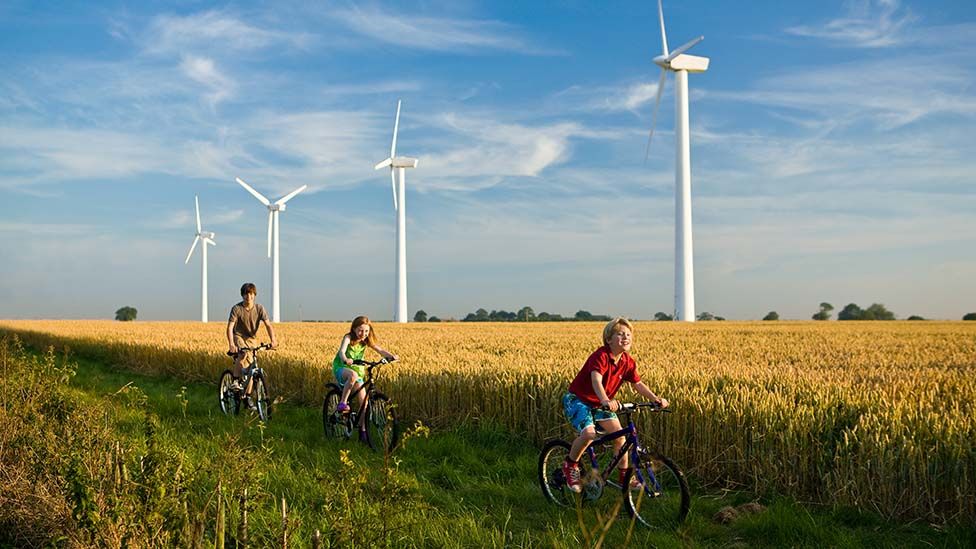
Kids cycling past wind turbines in the countryIMAGE SOURCE,

A deal has been agreed and signed at the climate summit in Glasgow, you might be left wondering what - if anything - it will mean for you.

Here are some ways in which the decisions made at COP26 could change your life.

A change in the way we get around

Switching to an electric car is among a number of lifestyle changes we're likely to be making.

Experts predict that new electric vehicles could cost the same as new petrol or diesel cars within the next five years. It is also possible to lease an electric vehicle, and there's a growing second-hand market, where these vehicles are cheaper.

Dozens of countries, regions and car companies have agreed to ramp up the use of electric vehicles and bring in new zero-emission buses and trucks.

Meanwhile, others argue we need fewer cars on the road - walking and cycling more could also be among the changes we make.

A switch to greener power

More than 40 countries have signed up to phasing out coal. A similar number have committed to ensuring that clean energy is the most reliable and affordable option for powering our homes and businesses.

For countries like the UK, this will mean continuing the move towards renewable sources such as wind and solar energy - and possibly more reliance on nuclear energy.

COP26 lacked a breakthrough announcement committing the world's biggest coal-users such as China and India to ending its use.

However, it's hoped the announcements made at Glasgow will send a signal to the market that it is worth investing in renewable energy.

Our homes get greener

Solar panels and heat pumps could become standard in our homes. We'll build new houses using low-carbon alternatives to cement and concrete - and try to re-fit old ones.There's also a focus on making sure our buildings, infrastructure and communities are able to withstand the current and future impact of climate change.

Eva Hinkers, Arup Sustainable Development Director says: "We also need to make sure [buildings] are fit for more extreme scenarios."

This could include improving green space in and around our homes to absorb extreme rainfall, installing "cool roofs" that reflect sunlight and prevent overheating, or introducing shutters so homes can withstand hurricane winds.

We may start paying more for carbon

Our lifestyles contribute to carbon emissions, whether we're shopping for imported food, or flying away on a foreign holiday.

In future, we may see the cost of a product's carbon emissions being added to the price we pay - whether or not it's made in the UK.

So if a business doesn't try and reduce the emissions of the goods it's selling, its prices may have to go up. It's hoped that will make consumers and businesses think again about how we consume and where we put our money.

In response to this, some big household names like Amazon, Unilever and Ikea have now said they're looking to ensure the cargo ships they use to deliver goods will run on cleaner fuels.


More space for nature

Nature's role in fighting climate change and the need to restore the natural world - from forests to peatland - was high on the agenda at Glasgow, and we may see the benefits in greener spaces around our towns and cities.

"Nature can be helping us here if we looked to actually treat it with the respect it deserves," says Dr Emily Shukburgh of the University of Cambridge.

The arguments to make space for nature are now clearer and louder than ever, ​says Craig Bennett, chief executive of The Wildlife Trusts. "There is now renewed momentum about the need to... protect forests and other precious habitats and put nature in recovery."

More expensive food?

Breaking the link between cutting down forests in the global south and products consumed in the global north, such as soybeans, beef and palm oil, could end the era of cheap food.

More than 100 countries have signed up to the Glasgow Leaders Declaration on Forests, which aims to halt deforestation.

Experts say that a hard choice could be faced - deforestation will never be stopped if sustainability concerns are always out-competed by price:

"Consumers will inevitably have to absorb some of these costs if we want to deliver on the COP 26 declaration - by paying more and consuming less," says Toby Gardner of the Stockholm Environment Institute.

Your pension and investments could be moving

More than 400 financial institutions - controlling an estimated $130tn of private finance - agreed at COP26 to provide more money for green technology.

It means that many major pension providers are going to be looking at investing your money in more environmentally friendly sectors.

This might include "helping our customers identify ways to improve the energy efficiency of their homes… investing in companies developing new, sustainable ways of living and working," says Janet Pope of Lloyds Banking Group.

A change of thinking?

We may also witness a shift in our way of thinking.

Dr Stephanie Sodero of the University of Manchester says the goal of sticking to 1.5 degrees - above which scientists say climate impacts will become more dangerous and unpredictable - could galvanise community action.

"On the ground, in UK communities and beyond, led by youth activists, I think there will be sustained and intense pressure to scrutinise all governance decisions - from local transport to national energy - through a climate lens," she says.

Matthew Hannon from the University of Strathclyde says the drive to net zero is likely to yield benefits such as cleaner air, quieter streets and better mental and physical health.

"Delivering a just, net zero transition should ultimately result in happier, healthier lifestyles," he says. "The question should therefore be less about what will I lose under net zero and more about what could I gain?"

A Nobel prize-winning economist's guide to cooking!


Abhijit Banerjee was 15 years old when he first cooked a meal.

Those who recognise his name will know that that first meal was not the start of a grand culinary career - rather, Mr Banerjee became a renowned economist and won the 2019 Nobel Prize.

But, in his own words, it was the first of "many thousands of meals" he would cook over the next four decades or so. And those experiments in the kitchen have now made for a surprising cookbook.

"The joke is that Abhijit is a better cook than he is an economist," his publisher says.

Cooking to Save Your Life, which is out this week, is cheeky and charming, telling you not just how to whip up a raspberry ceviche or a comforting bowl of dhal, but also when you should do so. The raspberry ceviche is there to impress others with your sophisticated palate; the dhal for when you want something that "wraps around you like a soft shawl on a winter day", Mr Banerjee writes.

The book began life as a collection of recipes the economist planned to give his brother-in-law for Christmas, but as he put them together he thought there might be something more in his instincts and insights as a cook.

"Cooking is a social act," he says. "It happens in a context. Sometimes, a meal is a gift to your family, sometimes it's an act of seduction, and sometimes it's self-expression."

And there are recipes in his book for all of these moments and more. A Spanish-inspired chickpea soup that may, in turn, inspire a marriage proposal; an "utterly delicious" and easy Bengali fish stew that will surprise your smug friend; a clever Moroccan cooked salad that can turn into a "conversation piece" when the in-laws are over; and a rich biryani as a salve after a night of heavy drinking.

Illustrations in the bookIMAGE SOURCE
Image caption,
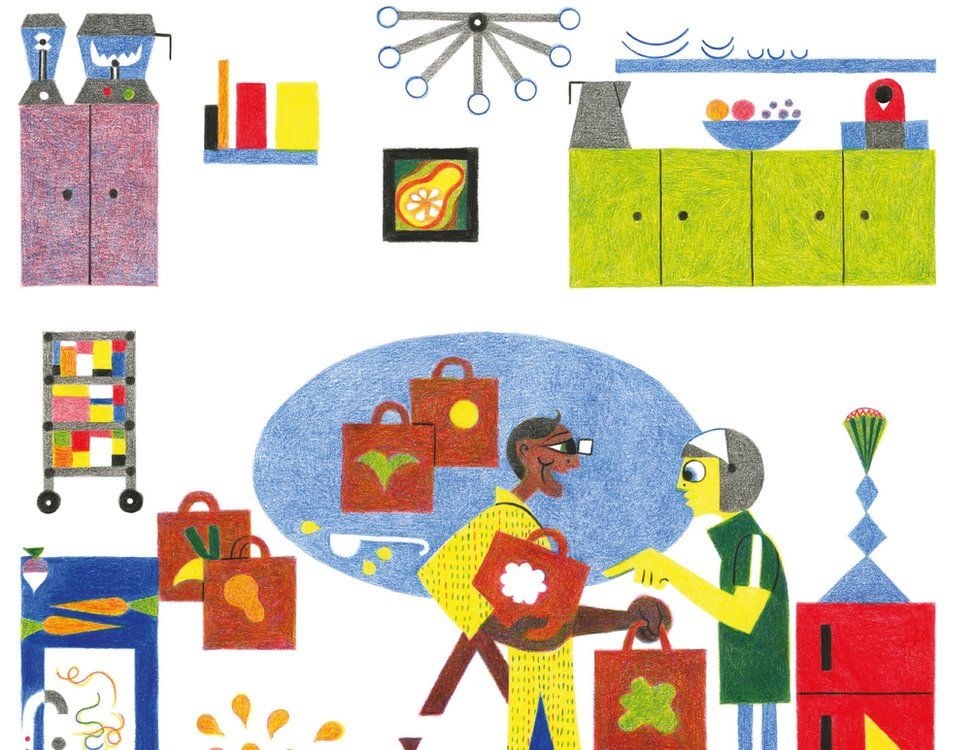
Mr Banerjee's irreverent and relatable book opts for playful illustrations over photographs

Rather than the usual glossy photographs of dishes, Mr Banerjee's book is filled with bright geometric illustrations by Cheyenne Oliver, the family's au pair, who has often cooked along with him.

"We wanted to make people focus on what flavours they want, rather than what the dish should look like," Ms Oliver says.

And rather than celebrate cooking as only an act of generosity, Mr Banerjee's irreverent and relatable book examines the various moods and pressures that drive us to cook, including envy, pride and necessity. He makes it clear that his book might not be very helpful to experienced cooks, but it does offer lessons beyond the recipe itself.

Mr Banerjee has spent much of his career in economics trying to understand how the poor live and the choices they make - seminal work that has won him and his colleagues the Nobel Prize. One of the things he found was that contrary to common perception, whether you are rich or poor, the joy of a delicious meal trumps nutrition.

And that's exactly what he serves up: indulgent and even decadent recipes that are built simply and cleverly, with conscious choices and without too many ingredients. The idea, he says, is to help you make the perfect meal even if you are lacking time or resources, or both.

For example: how to build a meal in which vegetables are the star and the meat is just a participant; how to cook chicken like a vegetable to coax the red meat-lovers to give it a try (as he did with his wife); how to plate up a dessert in under 15 minutes when you have run out of sugar.

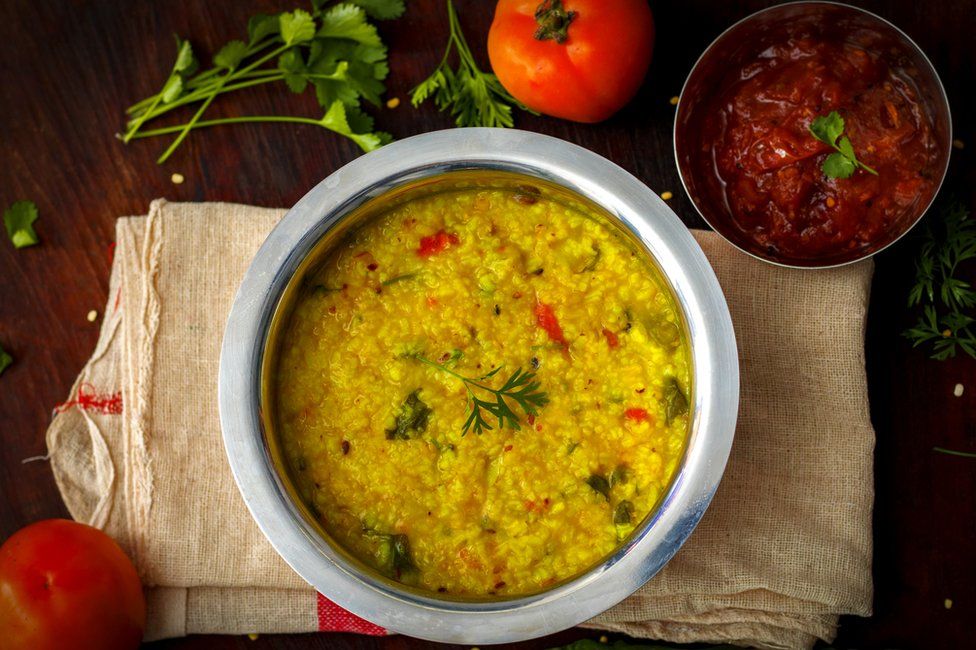
A plate of khichdiIMAGE SOURCE,S
Image caption,
Recipes include hearty Indian staples such as Khicdhi, a dish of rice, lentils and vegetables

Mr Banerjee's book is one that belongs nowhere in particular - it throws up recipes from Nepal to Sicily, but with enough nods to his Indian and especially Bengali roots and upbringing. There are plenty of Bengali staples here, from prawns simmered in coconut milk to a hearty local version of khichdi (rice, lentils and vegetables cooked together, which Mr Banerjee says is one of his favourite comfort foods).

The chapter on hors d'oeuvres is filled with Indian street food inspirations, from masala or spiced peanuts to spicy, sour potatoes (which incidentally go perfectly with a shot of chilled gin or vodka, according to Mr Banerjee's friend). The recipe for mango ceviche asks for banginapalli, a beloved Indian mango that is not typical of the South American dish.

He also manages to squeeze in three different recipes for dhals, which he declares to be "India's greatest contribution to the human civilisation". Mr Banerjee can think of 20 more recipes for dhal, he says, but he hopes these three do the job.

What is climate change? A really simple guide

  World temperatures are rising because of human activity, and climate change now threatens every aspect of human life. Left unchecked, huma...